
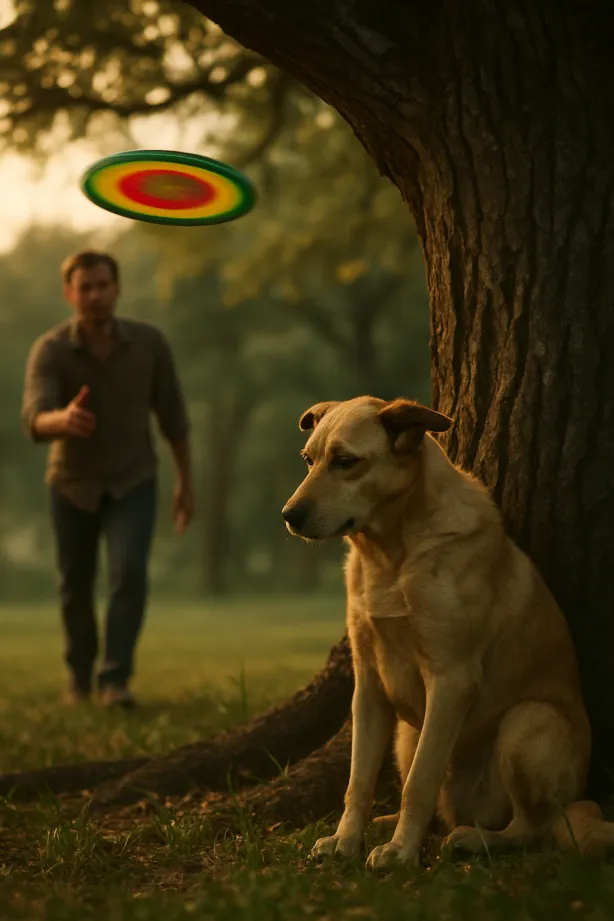
You’ve tried everything.
Three trainers. Two behaviorists. Medication that made things worse. Commands your dog “knows” but won’t follow. Treats that worked once, then stopped working entirely.
Everyone tells you the same thing: your dog is stubborn. Dominant. Anxious. Reactive. Needs more structure. More consistency. More correction.
They’re all wrong.
Your dog isn’t refusing to obey.
Your dog is gone.
What Dissociation Actually Is
In human psychology, dissociation is what happens when the mind can’t process what’s happening to the body. It’s the brain’s emergency exit – a way to survive what can’t be survived while staying fully present.
Trauma researchers call it “leaving without leaving.”
The body stays. The consciousness… doesn’t. Not entirely.
Dogs do this too.
When a dog’s nervous system is overwhelmed by trauma, by chronic stress, by environments or training methods that keep them in survival mode they fragment. They learn to “go away” while still being there.
The lights are on. Nobody’s home.
You call their name. They stare through you.
You ask them to sit. They don’t hear you – not because they’re stubborn, but because they’re not actually here.
They’re dissociated.
How We Created This (And Called It Training)
Most dog training is designed to suppress behavior, not understand it.
Commands work by creating compliance through pressure – do this or face consequences. Even “positive” training operates on the same principle: do this or lose the reward.
For dogs without trauma, this can work. For dogs with trauma – and that’s most dogs – it’s catastrophic.
Here’s why:
Trauma isn’t disobedience. It’s a nervous system that never learned safety.
When you ask a traumatized dog to “sit” and they freeze instead, that’s not stubbornness.
That’s a being whose brain just decided the present moment is too dangerous to process.
When your dog “knows” the command but won’t do it, that’s not defiance.
That’s dissociation. They’re not refusing. They’re not there.
Training methods that rely on repetition, correction, or even treat-based compliance don’t heal this. They make it worse. Because every session becomes another moment the dog has to survive by leaving.
You’re not training a dog. You’re training a ghost.
What Dissociation Looks Like (And Why You Missed It)
Dissociation doesn’t always look dramatic. It’s not always shaking, cowering, or fleeing.
Sometimes it’s:
- The blank stare. Eyes open, nobody home. You call their name – nothing. Not defiance. Absence.
- The body that complies but the mind that’s gone. They sit. They stay. They “obey.” But there’s no presence behind it. Just a body going through motions.
- The dog who “shuts down.” After a walk, after training, after guests leave – they disappear into sleep that looks more like collapse.
- The dog who’s “always anxious.” Panting, pacing, never settling. Not because they’re hyperactive. Because being present feels too dangerous, so they stay in motion to stay away.
- The dog who used to be “fine” and suddenly isn’t. One incident – fireworks, a vet visit, a dog fight, a move – and they’re different now. Not broken. Fragmented.
- The dog trainers call “stubborn.” Because when you ask them to do something and they stare at you like you’re speaking a language they used to know but can’t remember – that’s not willful disobedience. That’s a mind that left to survive.
Dissociation is your dog’s adaptive strategy. It worked once. It kept them alive. Now it’s the only tool they have.
And every training session that ignores this just teaches them to dissociate better.
Why Medication and Training Don’t Work
Most veterinary behaviorists will prescribe SSRIs, benzodiazepines, or sedatives.
The logic: if we calm the nervous system chemically, the behavior will improve.
It doesn’t.
Because you’re not treating the root. You’re sedating the symptom.
Medication can help – sometimes – but only as a bridge, not a destination. A dog on Prozac who’s still dissociating is just a dissociated dog who’s also medicated.
Training fails for the same reason.
You can teach a dissociated dog to sit, stay, heel. You can suppress reactivity with enough correction or bribe compliance with enough treats.
But you haven’t healed them. You’ve just taught them to perform while fractured.
The moment the pressure changes – a new environment, a trigger you didn’t anticipate, the absence of your control – the dissociation returns. Because it was never gone. You just covered it.
What Actually Heals Dissociation
Not commands. Not medication. Not more consistency or structure or boundaries.
Safety.
Real, embodied, nervous-system-level safety.
The kind that doesn’t come from you controlling their environment.
The kind that comes from them learning – slowly, carefully, without coercion – that the present moment won’t hurt them.
This is psychiatric work. Clinical work. It requires:
1. Recognizing dissociation for what it is
Not stubbornness. Not disobedience. Not a “training problem.”
A survival response that’s still running even though the danger is gone.
2. Stopping the methods that reinforce it
No more commands that demand presence from a dog who’s gone.
No more training sessions that they have to survive by leaving.
No more pressure disguised as “structure.”
If your dog dissociates during training, the training is the problem.
3. Restoring nervous system regulation
This isn’t about teaching calm. It’s about creating the conditions where calm becomes possible.
- Predictable environments (not rigid – predictable)
- Time and space to decompress (not constant stimulation or “socialization”)
- Relationships that don’t require performance (you, being present, without needing them to do anything)
4. Therapeutic presence, not technique
You can’t train a dog out of dissociation.
But you can hold space for them to come back.
That means learning to be with them without fixing, commanding, or managing. It means noticing when they leave and not demanding they return. It means being the kind of presence that doesn’t require them to survive you.
This is the hardest part. Because it asks you to change, not them.
5. Addressing the root trauma
Dissociation doesn’t come from nowhere.
Sometimes it’s obvious: abuse, neglect, a specific incident.
Sometimes it’s invisible: chronic stress, early separation, training methods that felt “fine” but weren’t.
Either way, the body remembers.
Healing means working with what the body holds – through somatic approaches, attachment repair, and sometimes just time. Lots of time. More than you think. More than anyone told you it would take.
The Work Takes Four Sessions (Usually)
Most people don’t believe us when we say this.
Four sessions to resolve what trainers, behaviorists, and medication couldn’t touch.
Not because we’re magic. Because we’re working with the actual problem.
We don’t train your dog. We help their nervous system remember what safety feels like. We work with the dissociation directly – recognizing it, not punishing it. Creating the conditions for integration, not compliance.
And we work with you – because often, the dog’s dissociation is entangled with your own stress, fear, or trauma. You can’t hold space for their nervous system to regulate if yours is dysregulated.
Four sessions. Sometimes more. Sometimes less.
Always as much as it takes to reach the root.
What Happens When They Come Back
You’ll know it when you see it.
The first time they look at you and you can tell someone’s home.
The first time they settle – not collapse, not shut down, but actually rest – without vigilance.
The first time you call their name and they turn toward you not because they have to, but because they want to.
It’s not obedience. It’s presence.
And once they’re present – once they’re here, in their body, in this moment – everything else becomes possible.
Not because you trained them.
Because they came back.
If This Sounds Like Your Dog
You’re not imagining it.
You’re not a bad owner. You didn’t fail them. You just didn’t know what you were looking at.
Most people don’t. Most trainers don’t. Most vets don’t.
Dissociation in dogs isn’t taught in veterinary school. It’s not part of the certification process for dog trainers. Behaviorists acknowledge trauma exists, but they still treat it with the same tools designed for compliance, not healing.
We do this differently.
We work with the psychological reality of what your dog is experiencing. We treat them as sentient beings with inner lives – capable of trauma, dissociation, and profound suffering that no amount of “training” can touch.
And we help them – and you – remember what wholeness feels like.
If you’re ready:
Your dog isn’t broken.
The world broke them.
We help you both remember what it means to be whole.
