
The Trauma Wing
Trauma-Informed Care for Dogs: Understanding and Helping Animals Heal
The First Step Towards Your Family's Healing And Happiness
Caring for a companion animal who has unresolved trauma is beyond challenging and often heartbreaking. As a result, well-meaning pet owners, veterinarians, and even some animal professionals often misunderstand or become frustrated with traumatized animals. For instance, the anxious, depressed, or traumatized dog may act aggressively, and that behavior gets misinterpreted as “dominance” or “bad training.” It’s common that people in their life don’t fully understand the effect of stressful situations on an animal’s developing or healing nervous system.
First of all, our animal trauma therapists help families view behaviors through a trauma-informed lens. As specialized mental health professionals, we work with animals and their families to learn the tools to understand and support strong, overwhelming emotions and reactions. Next, your therapist works with both you and your companion to resolve the pain that has been weighing them down.
Your beloved companion can heal, and you can develop the relationship with them you have been yearning for. If you want to take the first step towards healing your animal’s trauma, we can help! Contact us today and get connected with one of our skilled animal trauma therapists. Through specialized counseling, you can start finding the healing your family deserves.
What Trauma Looks Like in Dogs
“Trauma in dogs is the lasting emotional and physical impact of distressing experiences, often showing as fear, withdrawal, or reactivity.”
Trauma isn’t just what happened – it’s what stayed. It clings to the nervous system like a burr in the fur, altering how a dog moves through space, trust, and time.
Maybe there wasn’t one explosion. Maybe it was the long silence that followed.
For dogs, trauma shows up in whispers: a flinch, a bark that sounds more like a question, the refusal to enter a room where nothing seems wrong.
It’s not a behavior problem. It’s a survival strategy, still active, even after the danger is gone.
Think of trauma like invisible weather. Some dogs are still bracing for a storm they can’t name.
Trauma in dogs is the lasting emotional and physical impact of distressing experiences.
It can show up as fear, withdrawal, reactivity, hypervigilance, or shutdown.
Common real-world signs include:
-
Hiding or avoiding certain rooms, people, or situations
-
Overreacting to noises, movements, or being touched
-
Difficulty relaxing, even in a safe environment
-
Sudden changes in behavior after an incident
Plainly put: a traumatized dog is doing their best to survive in a world that once hurt them.
Trauma in animals occurs when they experience or witness events that overwhelm their ability to cope, creating lasting changes in their nervous system and behavior. Just like humans, animals can develop Post-Traumatic Stress Disorder (PTSD) and other trauma-related conditions.
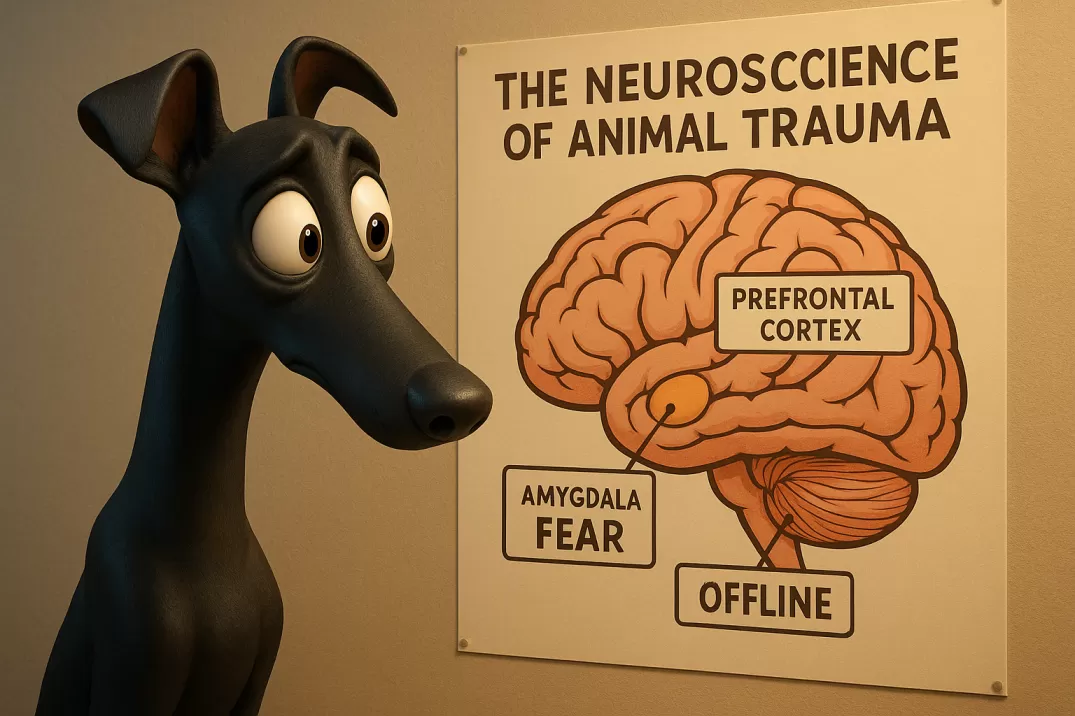
The Neuroscience of Animal Trauma
When a dog experiences trauma, their brain undergoes significant changes. The amygdala (fear center) becomes hyperactive, while the prefrontal cortex (decision-making area) goes offline. This creates what we call the “trauma response” – a state where the animal is constantly scanning for danger, even when safe.
Think of it this way: A traumatized dog’s nervous system gets stuck in “survival mode.” Their brain believes they’re still in danger, even when they’re in a loving home. This isn’t a choice – it’s a biological response to overwhelming experiences.
What is trauma-informed care?
“Trauma-informed care is an approach to helping animals that recognizes the lasting impact of trauma, avoids re-traumatizing them, and focuses on safety, trust, and choice.”
It’s care that doesn’t assume.
Doesn’t barge in. Doesn’t punish fear.
It listens before touching, watches before acting.
It knows the map isn’t the territory – and that territory might be scorched in places.
Trauma-informed care isn’t just about helping – it’s about how we help. It asks:
What happened to you?
Instead of:
What’s wrong with you?
For dogs, it means we don’t demand obedience – we offer safety.
We don’t flood them with affection – we build consent, one tail wag at a time.
The Foundation of Trauma-Informed Care
Instead of asking “What’s wrong with this dog?” we ask “What happened to this dog?”
This fundamental shift changes everything. Rather than seeing a “bad,” “aggressive,” or “difficult” dog, we see an animal whose behaviors make perfect sense given their experiences. Every behavior becomes communication about their internal state and unmet needs.
Core Understanding: Safety First
Trauma-informed care recognizes that safety is the foundation of all healing. For traumatized animals, this means:
– Physical safety: Freedom from harm, adequate food, shelter, and medical care
– Emotional safety: Predictable, consistent, nurturing relationships
– Psychological safety: Freedom from overwhelming stimuli and triggering situations
A traumatized dog cannot learn, bond, or heal until they feel fundamentally safe. This is why traditional training methods often fail with trauma survivors – they may inadvertently trigger the animal’s trauma response.
The Trauma-Informed Perspective
Traditional Approach: “This dog is being stubborn/dominant/bad”
Trauma-Informed Approach: “This dog is communicating that they don’t feel safe”
Traditional Approach: “We need to correct this behavior”
Trauma-Informed Approach: “We need to understand what this behavior is telling us”
Traditional Approach: “The dog needs to learn to obey”
Trauma-Informed Approach: “The dog needs to learn they can trust”

🧬 Scientist Wolf Wisdom:
“Trauma leaves paw prints on the brain. With patience, safety, and the right kind of sniffing, they fade.”
Recognizing The Signs
Common Sources of Trauma in Dogs
Your animal companion doesn’t seem like themselves, but it’s hard to pinpoint what’s behind their behavior changes. You wonder if it relates to something they experienced or witnessed:
– Adoption and EVERY Dog is adopted, no matter if breeder, street or shelter. Every dog leaving for a new family leaves their birth mother.
– Medical trauma from surgeries or prolonged treatments
– Accidents like car crashes or attacks by other animals
– Natural disasters or emergency evacuations
– Loss of a bonded companion (human or animal)
– Major life changes like moving, divorce, or new family members
– Witnessing violence or family conflict
– Abuse or neglect before joining your family
– Abandonment experiences or shelter trauma
– Other bad experiences like a bad Kennel stay, an abusive sitter, a scary Vet visit
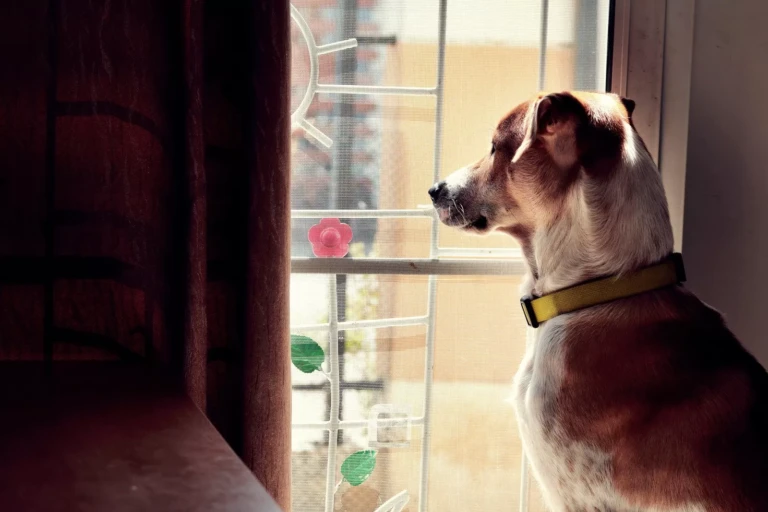
Trauma can take many different forms, and every animal responds differently. Some companions recover naturally with time and patience, while others need the support of a specialized animal trauma therapist to guide them toward healing.
“Every adoption, even in loving circumstances, involves a separation that can leave an emotional imprint.”
Symptoms Of Trauma & PTSD In Animals
Animals who have experienced trauma may appear fine on the surface – they might seem to be coping, or they might avoid situations that remind them of their difficult experience. In reality, there’s often a lot happening beneath the surface.

Common signs of trauma in companion animals include:
– Behavioral regression or loss of house training
– Hypervigilance or constant alertness to perceived threats
– Anxiety or fearfulness in previously comfortable situations
– Aggression or reactivity that seems out of character
– Withdrawal from family members or preferred activities
– Sleep disturbances including nightmares or restless sleep
– Startle responses to normal sounds or movements
– Destructive behaviors or repetitive actions, in some cases obsessive-compulsive behavior like excessive licking
– Physical symptoms like digestive issues or chronic pain without clear medical cause
– Dissociation or seeming “checked out” from their environment
Why Standard Dog Training Often Makes Trauma Worse
Many well-meaning owners turn to traditional obedience training, conditioning, or reinforcement systems when their dog struggles.
But these methods frequently fail – even harm – dogs, especially those who carry emotional scars.
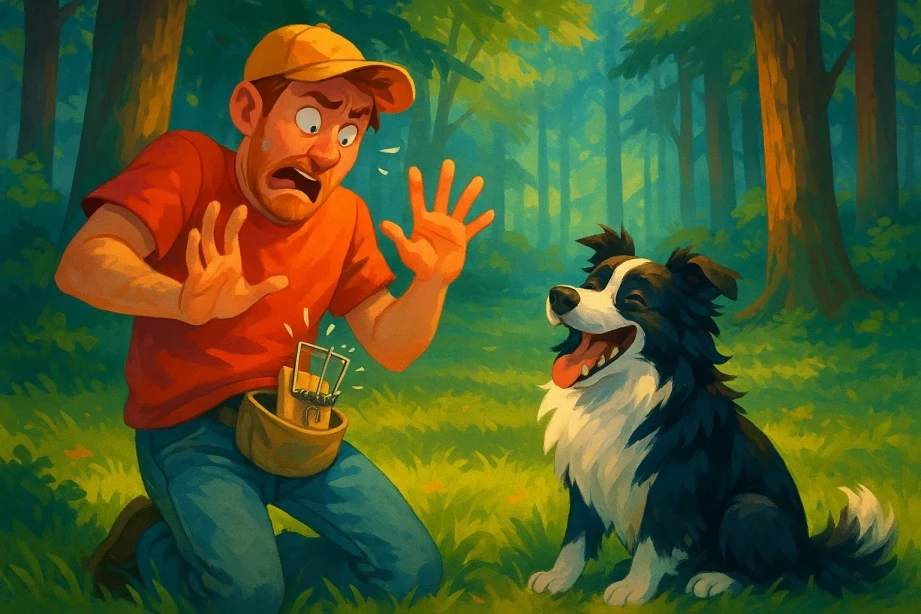
Here’s why:
-
Pressure triggers survival responses – Being forced into certain positions, situations, or commands can feel unsafe.
-
Performance over trust – Training often focuses on the behavior we want, not the emotional state of the dog. This can suppress symptoms without addressing the cause.
-
Misinterpreted “success” – A traumatized or sensitive dog who stops reacting isn’t necessarily “better.” They may be shutting down to avoid more stress – a survival tactic, not healing.
Trauma-informed care flips the priority:
First comes safety and trust, then choice, then gradual confidence-building. Only when the dog feels secure we evaluate which skills are useful to learn for daily life and/or jobs. And we find alternatives to common training methods.
About UsUnderstanding. Empowerment. Connection.Serving Dogs, Cats, Horses, and Their Families
Every Animal Deserves to be Understood, Empowered, Connected, and Loved.
We see animal mental health as the holistic integration of the emotional, behavioral, biological, social, environmental, and relational aspects of each individual companion. We believe in conducting animal therapy in partnership with families, veterinarians, trainers, and other specialists to ensure that each animal receives a personalized treatment plan that is reinforced in all settings.
We would love to come alongside your family to create positive connections for better understanding and growth.
Our Unique Approach
We Work With You to Get Where You Want to Go
We have extensive experience helping animal families facing a variety of trauma issues and incorporating an array of evidence-based therapy techniques in the treatment process. There are many types of therapy approaches for animals. At TAO Animal Center, we focus on those that utilize the nervous system’s natural ability to heal itself.
We are eclectic in our approach, interweaving various evidence-based modalities to provide the unique approach each individual animal needs to heal. We allow each companion to move through the healing process at their own pace. Play and environmental therapy can serve as catalysts for meaningful communication between the animal and therapist. In our work with traumatized animals, these approaches allow them to process their experiences, especially when combined with somatic healing modalities.
Family-Centered Approach
Because Healing Happens Together
We know that when your beloved companion struggles, the whole family feels it. You’ve been living with their fear, managing their triggers, and probably questioning whether you’re doing enough to help them heal.
Our comprehensive support includes:
– Individual sessions with your companion using species-appropriate therapeutic techniques
– Family therapy sessions to strengthen bonds and improve communication
– Guardian counseling to support you through this challenging journey
– Environmental modification guidance to create healing spaces
– Ongoing support as you navigate your companion’s recovery together
We put the furry, four-legged family member front and center, because we understand they’re not just pets – they’re family. Their healing matters, their emotions are valid, and their recovery deserves the same professional attention we’d give any family member.
“The only thing more misunderstood than trauma is a Fox Terrier with trust issues.”
Why Choose UsWhat Makes Us Unique
When you bring your companion animal to us, you are bringing them to a group of therapists who believe in helping you tune into your animal’s deepest needs. Animal, guardian, and family therapy will help you learn your companion’s preferred methods of communication. Once you reconnect with your animal and learn to speak their language, you can decipher what their behavior is really trying to say.
As you and your companion grow through the therapy process, you’ll be better able to help them recognize when their emotions are too overwhelming to handle and develop appropriate ways of self-soothing and seeking support.
We specialize in therapy services and all-round trauma-informed services for animals of all ages, from puppies and foals to senior companions. We know that even very young animals can need therapeutic support sometimes. We offer services to families with young animals because we know early intervention is often essential for preventing long-term behavioral and emotional issues. With TAO Animal Center you have a life-long partner who cares for all ages, breeds, sizes and abilities, including animals and people with disabilities.
Working with a variety of animals for decades with a naturally trauma-informed approach allows us to offer you a wealth of experience.
We treat your whole family, and you are treated like family.
Our Services
Comprehensive Animal Trauma Therapy & Family Support

Animal Trauma & PTSD Therapy
Specialized treatment for companions who have experienced abuse, neglect, accidents, medical trauma, or other overwhelming experiences.
Anxiety & Fear Treatment
Support for animals struggling with generalized anxiety, specific phobias, separation anxiety, or hypervigilance.
Behavioral Therapy
Understanding and addressing behaviors that stem from emotional distress rather than training issues.
Grief & Loss Counseling
Support for animals mourning the loss of bonded companions, family members, or major life changes.
Medical Trauma Recovery
Specialized support for animals recovering from surgeries, extended veterinary treatment, or medical procedures.
Rescue & Adoption Support
Helping newly adopted animals and their families navigate attachment, trust-building, and integration.
Guardian Counseling
Individual support for pet parents navigating the stress, heartbreak, and challenges of caring for a traumatized companion.
Family Therapy Sessions
Joint sessions that strengthen the human-animal bond and improve communication within the family system.
Environmental Therapy
Guidance on creating healing spaces and modifying environments to support recovery.
Crisis Support
Immediate support for families dealing with acute behavioral crises or trauma responses.

Other Services
Not looking for Animal Trauma Therapy?

Check out our other services:
- Separation Anxiety Treatment
- Animal Behavioral Therapy
- Grief & Loss Counseling for Pets
- Highly Sensitive Animal Support
- Guardian/Pet Parent Counseling
- Multi-Pet Household Dynamics
- Senior Animal Support
- New Adoption Integration
- Medical Trauma Recovery
- Mental Health Services
- Retreats
- Education & Courses for Pet Parents and Professionals
Frequently Asked Questions

Ready To Begin Your Family's Healing Journey?
If you still have questions and aren’t 100% sure we’re the right fit for your family’s needs, schedule a free consultation today. You’ll have the opportunity to speak directly with one of our trained animal trauma therapists, learn more about our practice, and ask any questions you have.
As a result of our experience as animal mental health experts, we believe that companion animals are resilient. Whether your dog is 6 months or 12 years old, whether your cat is a recent rescue or longtime family member, counseling can help them overcome abandonment trauma, abuse history, medical trauma, or numerous other stressful situations. While it’s scary as a pet parent to watch your companion suffer, our staff have seen countless animals find healing and move forward. Because of our training and experience, we believe your companion can heal. And we are passionate about providing effective, supportive therapy designed specifically for the animal-human bond.
Glossary
-
Trauma, Trauma in dogs – Lasting emotional or physical stress after a harmful experience.
-
Trigger – A reminder of past trauma that sparks fear or defensive behavior.
-
Safety Cues – Signals that tell the dog they are secure in the moment.
-
Decompression Time – Quiet, low-stimulation rest after stress.
