
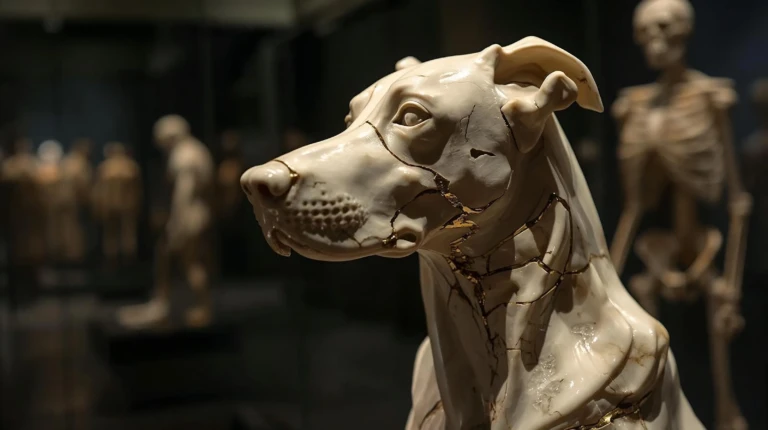
Why Training Can’t Fix What Trauma Broke
TAO Animal Center Research Dept.
Abstract
Standard behavioral protocols for “reactive,” “fearful,” or “aggressive” dogs emphasize desensitization, counter-conditioning, and obedience training. While these approaches can modify observable behavior, they often fail when underlying trauma remains unaddressed. This paper introduces trauma-informed care principles for dogs, drawing parallels from human trauma treatment. We argue that trauma is not a training problem requiring correction, but a nervous system injury requiring healing. Dogs with trauma histories need safety, processing time, and agency restoration – not more control and exposure. We provide frameworks for identifying trauma vs. inadequate socialization, distinguish trauma response from “bad behavior,” and offer trauma-informed intervention protocols that prioritize nervous system regulation over behavioral compliance.
Keywords: canine trauma, PTSD, trauma-informed care, desensitization limitations, nervous system healing, rescue dogs
Introduction: When Training Isn’t Enough
A common scenario:
Rescue dog, 2 years old. Lunges at men with hats. Aggressive, say the previous adopters who returned her.
Standard approach:
- Desensitization protocol (gradual exposure to men in hats)
- Counter-conditioning (pair men in hats with treats)
- Obedience training (focus on handler instead)
- Goal: Dog tolerates men in hats without reaction
After 6 months: Some improvement. Dog doesn’t always lunge. But shows:
- Stress signals throughout (lip licking, whale eye, stiff body)
- Occasional regression (sudden aggressive displays)
- Hypervigilance (constant scanning for hats)
- Handler-dependency (can’t tolerate exposure without handler present)
Is this success?
The dog complies. But the dog is not healed.
Why? Because we treated this as a training problem when it was a trauma problem.
What is Trauma?
Defining Trauma in Dogs
Trauma is:
- An experience that overwhelms the nervous system’s ability to cope
- Creates lasting changes in threat-detection and response
- Not about the event itself, but about the impact on the nervous system
In humans, we understand: A car accident might traumatize one person but not another. The trauma is in the nervous system response, not the event.
For dogs, same principle.
What can be traumatic for dogs:
- Physical abuse (beatings, harsh corrections, shock collars)
- Neglect (extended isolation, starvation, lack of social contact)
- Witnessing violence (toward themselves, other animals, or bonded humans)
- Loss of attachment figure (especially without preparation)
- Life-threatening situations (attacks by other dogs, car accidents, near-drowning)
- Prolonged fear without escape (hoarding situations, puppy mills, laboratories)
- Medical trauma (painful procedures without adequate pain management or support)
- Deployment trauma (military working dogs, disaster response dogs)
Trauma vs. Inadequate Socialization
This distinction is critical:
Inadequate Socialization:
- Dog lacks experience with specific stimuli
- Fearful because unfamiliar
- Nervous system says: “Unknown = potential threat”
- With exposure (done properly), fear decreases
- Learns: “This is safe”
Trauma:
- Dog has experience with specific stimuli – bad experience
- Fearful because of memory
- Nervous system says: “Known threat – remember what happened”
- Exposure often increases fear (re-traumatization)
- Already knows: “This is dangerous” (and they’re right, it was)
Example:
Inadequate socialization:
- Dog never saw a motorcycle
- Motorcycle appears, dog startles (unfamiliar)
- With gradual exposure, curiosity emerges
- Fear decreases as familiarity increases
Trauma:
- Dog was hit by motorcycle (or witnessed bonded human hit)
- Motorcycle appears, dog panics (memory)
- Exposure triggers trauma response
- Fear may intensify (re-experiencing trauma)
The interventions required are completely different.
Signs of Trauma in Dogs
Behavioral Indicators
Hypervigilance:
- Constant environmental scanning
- Can’t settle even in safe environments
- Startles easily
- Sleeps lightly or restlessly
- Always “on alert”
This isn’t “high energy.” This is nervous system in constant threat-detection mode.
Avoidance:
- Refuses to enter certain spaces
- Specific trigger avoidance (people with hats, men with beards, specific rooms)
- May refuse walks in certain directions
- Avoids situations that seem innocuous to humans
This isn’t “stubborn.” This is nervous system saying “danger there.”
Reactivity:
- Sudden, intense responses to triggers
- May seem “out of nowhere” to observer
- Often directed at specific trigger types
- Response disproportionate to current stimulus
This isn’t “aggression.” This is survival response to perceived threat.
Shutdown:
- Freezing when triggered
- Dissociation (glazed look, unresponsive)
- Learned helplessness (stops trying)
- May urinate/defecate when frozen
This isn’t “calm.” This is nervous system overwhelm.
Regression:
- Progress, then sudden return to fear
- Triggered by seemingly minor events
- “Good days” and “bad days” pattern
- May lose previously learned coping
This isn’t “poorly trained.” This is trauma response pattern.
Physical/Physiological Indicators
Chronic Stress Markers:
- Elevated baseline cortisol
- Digestive issues (diarrhea, vomiting, poor appetite)
- Immune suppression (frequent illness)
- Premature aging markers
- Coat/skin issues (stress-related)
Trauma-Specific Patterns:
- Hyperarousal (can’t downregulate)
- Hypoarousal (shutdown, dissociation)
- Rapid switching between states
- Stress response to minor stimuli
Why Standard Approaches Fail with Trauma
The Desensitization Problem
Desensitization assumes:
- Fear is from lack of positive experience
- Gradual exposure will reduce fear
- Pairing with rewards creates positive association
- Time and repetition will resolve issue
This works for inadequate socialization. This fails with trauma.
Why?
Trauma isn’t about lack of positive experience. It’s about presence of negative experience that changed the nervous system.
Case Example:
Dog was attacked by large black dog at age 1. Now age 3, lunges aggressively at all large black dogs.
Desensitization protocol:
- Gradual exposure to large black dogs at distance
- Treats when calm
- Decrease distance over time
- Goal: Dog tolerates large black dogs
Problems:
- Each exposure risks re-traumatization (reminding nervous system of attack)
- “Tolerance” ≠ feeling safe (dog may comply but remain terrified)
- Doesn’t address underlying trauma (memory of attack unchanged)
- May create learned helplessness (dog stops protesting but fear remains)
The dog might appear “better” (stops lunging). But the trauma? Unprocessed.
The Counter-Conditioning Limitation
Counter-conditioning assumes: Create new association (trigger = treats) to override old association (trigger = danger)
Problem:
You can’t counter-condition away a memory of actual danger.
If the dog was actually attacked by a large black dog:
- The association “large black dog = danger” is accurate, not irrational
- Treats don’t change what happened
- The nervous system’s threat detection is working correctly (identifying genuine risk based on past experience)
You’re asking the dog to ignore accurate threat assessment.
The Training Fallacy
“This is a training problem. Dog needs to learn better behavior.”
No.
Trauma response is not:
- Lack of training
- Insufficient obedience
- Need for more control
Trauma response is:
- Nervous system injury
- Survival mechanism
- Protection strategy
- Adaptive (even if inconvenient)
You can’t train away trauma any more than you can train away a broken leg.
The Polyvagal Framework for Understanding Trauma
The Three States
Dr. Stephen Porges’ Polyvagal Theory explains mammalian nervous system responses:
1. Ventral Vagal – Social Engagement (Safe & Connected)
- Optimal functioning
- Open to learning, connection, exploration
- Calm, regulated
2. Sympathetic – Mobilization (Fight or Flight)
- Threat detected
- Hyperarousal, hypervigilance
- Reactive, explosive, aggressive OR fleeing, avoidant
3. Dorsal Vagal – Immobilization (Shutdown)
- Overwhelming threat
- Freeze, dissociation, collapse
- Appears “calm” but is actually overwhelmed
Trauma Traps the Nervous System
Non-traumatized dog:
- Spends most time in ventral vagal (safe & connected)
- Briefly enters sympathetic when needed (actual threat)
- Returns to ventral vagal when safe
Traumatized dog:
- Baseline is sympathetic (constant vigilance) or dorsal vagal (shutdown)
- Ventral vagal is rare or inaccessible
- Triggers push immediately to extreme sympathetic or dorsal
- Can’t return to ventral vagal easily
The problem: You can’t train a dog in sympathetic or dorsal activation. Learning requires ventral vagal state.
Standard training protocols: Expose dog to trigger (pushing to sympathetic/dorsal), try to train new response.
Why it fails: Dog’s nervous system is in survival mode, not learning mode.
Trauma-Informed Principles for Dogs
Principle 1: Safety First, Always
Not “perceived safety” (what you think is safe).
Actual nervous system safety (what the dog’s nervous system experiences as safe).
This means:
- If dog says “not safe,” believe them
- No forced exposure “for their own good”
- Safety is prerequisite for healing, not outcome
Implementation:
- Create genuinely safe spaces (no trigger access)
- Predictable routines
- No surprise exposures
- Dog controls distance from triggers
- Escape routes always available
Principle 2: Regulate Before You Educate
Before any training, behavioral work, or exposure:
Dog must be in ventral vagal state (regulated).
If dog is:
- Hypervigilant (sympathetic)
- Frozen (dorsal)
- Displaying stress signals
Then: No training. First: Regulation support.
How to support regulation:
- Remove from triggering situation
- Calm presence (co-regulation)
- Physical relief (water, quiet space, comfortable rest)
- Time
- No demands
Only when regulated: Consider working on anything.
Principle 3: Agency Over Obedience
Trauma often involves powerlessness.
Healing requires restoring agency.
This means:
- Dog chooses engagement (not forced)
- Dog can opt out (always)
- Dog sets pace (not handler)
- Control over environment when possible
Controversial but critical: Sometimes the healing answer is “Dog doesn’t have to tolerate X.”
Example:
- Dog is terrified of vet visits (trauma from previous painful procedures)
- Training approach: Desensitize to vet office
- Trauma-informed approach: Find fear-free vet, mobile vet, or Fear Free certified practice; use sedation when needed; allow dog to refuse non-essential procedures
The goal isn’t compliance. The goal is wellbeing.
Principle 4: Process, Don’t Suppress
Trauma needs processing, not suppression.
What is processing?
For humans: Therapy where trauma is explored, emotions expressed, meaning made, nervous system learns “it’s over.”
For dogs: More complex (no verbal therapy), but processing still occurs through:
- Safe expression of emotion:
- Allowing fear responses (shaking, hiding)
- Not punishing stress signals
- Providing comfort (not forced, but available)
- Gradual exposure at dog’s pace:
- Dog chooses to approach trigger
- Can retreat anytime
- No pressure
- Build positive experiences slowly
- Nervous system recalibration:
- Safe environment over time
- Predictability
- Experiences that contradict trauma (“not all X are dangerous”)
- But naturally occurring, not forced
Example:
Dog traumatized by abuse from man with beard.
Suppression approach:
- Force exposure to bearded men
- Punish fearful behavior
- “Get over it”
- Dog may comply (but trauma remains, suppressed)
Processing approach:
- Safe environment where bearded men don’t appear (initially)
- When dog ready, very gradual exposure (at dog’s choice)
- Positive experiences with safe bearded men (if dog chooses to engage)
- Timeline: Months to years, not weeks
- Dog’s nervous system slowly learns: “Some bearded men are dangerous (true). Not all are (also true).”
Principle 5: Time Is Non-Negotiable
Trauma healing is not linear. It’s not fast.
Human trauma recovery: Months to years, often lifelong management.
Dog trauma recovery: Similar timeline.
No shortcuts. No “quick fixes.” No “I’ve tried everything for 3 months.”
Trauma-informed timeline expectations:
- Initial safety establishment: Weeks to months
- Beginning to regulate: Months
- Engaging with triggers (if ever): Many months to years
- “Full recovery”: May never be complete – management, not cure
This frustrates people. But trauma doesn’t care about human timelines.
Principle 6: The Nervous System Knows
If a dog says something is unsafe:
They’re right.
Maybe not objectively (to you, it seems safe).
But subjectively (to their nervous system, based on their history), it IS unsafe.
Believe them.
Don’t override their neuroception with your logic.
Trauma-Informed Assessment
Questions to Ask
Instead of: “What’s wrong with this dog’s behavior?”
Ask:
- “What happened to this dog?”
- Known history?
- Unknown history?
- Single incident or chronic exposure?
- “What is this behavior protecting them from?”
- What threat does their nervous system perceive?
- Is this a memory or current danger?
- What does this behavior accomplish? (Distance from threat? Control?)
- “What would safety look like to this dog?”
- What environmental changes would help?
- What control do they need?
- What triggers can be avoided?
- “Is this nervous system in survival mode or learning mode?”
- Can this dog access ventral vagal state?
- Are they chronically in sympathetic/dorsal?
- What supports regulation?
- “What has already been tried, and why did it fail?”
- Previous training?
- Medication?
- What worked even slightly?
- What made things worse?
Red Flags This Is Trauma, Not Training
If:
- Standard training makes behavior worse
- Dog shows fear, not just lack of knowledge
- Specific triggers (not general fearfulness)
- History suggests possible trauma
- Stress signals accompany “misbehavior”
- Regression occurs with “progress”
- Dog seems unable to relax even in safe environments
- Medication helps but doesn’t resolve
Then: Trauma-informed approach needed, not more training.
Case Studies: Trauma-Informed vs. Standard Approach
Case 1: The Dog Who Hated Men in Hats
Presentation:
- 3-year-old female mixed breed
- Aggressive displays toward men in hats specifically
- Returned from two previous adoptions
History (eventually discovered):
- Dog lived outside, only interacted with to impress visitors
- Primary owner: man in baseball cap
- Regularly beaten with rolled newspaper
Standard approach attempted (6 months):
- Desensitization to men in hats
- Counter-conditioning (treats when men in hats present)
- Obedience training
- Result: Some improvement in controlled settings, but continued aggression in real-world encounters, high stress throughout
Trauma-informed approach:
Phase 1 (Months 1-3): Safety establishment
- No exposure to men in hats (avoid trigger completely)
- Safe home environment
- Predictable routine
- Build trust with adopter (woman)
- Focus: Regulation, not training
Phase 2 (Months 4-6): Nervous system stabilization
- Still avoiding trigger
- Positive experiences with women in hats (safe)
- Positive experiences with men without hats (gradual)
- Dog-choice engagement
- Focus: Building positive experiences in safe contexts
Phase 3 (Months 7-12): Processing
- Dog began choosing to observe men in hats from distance (her choice)
- No pressure to approach
- Positive experiences with specific known safe men in hats (adopter’s husband, eventually wore hat around dog)
- Timeline: Dog-directed
- Focus: Agency, choice, gradual exposure at dog’s pace
Outcome after 18 months:
- Dog tolerates men in hats in public (no aggression)
- Still prefers distance (respected)
- Can be in same room with known men in hats
- Stress signals decreased 90%
- Dog is not “cured” – dog has learned some men in hats are safe, while maintaining appropriate caution
Key differences:
- Standard approach: 6 months of forced exposure, high stress, modest behavior change
- Trauma-informed: 18 months of safety-first approach, restored agency, significant healing
Timeline longer. Outcome deeper.
Case 2: The Shutdown Dog
Presentation:
- 5-year-old male Labrador
- “Perfect dog” – never causes problems, very calm, obedient
- Owner concerned: “He seems sad”
Assessment:
- Dog rarely moves without permission
- Freezes when uncertain
- Urination when startled
- Doesn’t play, doesn’t explore
- “Calm” = dorsal vagal shutdown, not ventral vagal peace
History (unknown initially):
- Later discovered: Owner used severe punishment-based training
- Shock collar, alpha rolls, forced submission
- Dog learned: Movement = pain, Compliance = safety
Standard approach would miss this:
- Dog appears well-trained
- No “behavior problems”
- Might not seek help
Trauma-informed assessment recognized:
- This is learned helplessness
- This is freeze response
- This is trauma, not training success
Trauma-informed approach:
Phase 1: Permission to exist
- No commands (none)
- Food freely available
- Freedom to move without asking
- Gentle encouragement (no force) to explore
- Focus: Can you just BE?
Phase 2: Awakening
- First 3 months: Dog barely moved
- Month 4: First independent movement (getting water without “permission”)
- Month 6: First play behavior (tentative)
- Month 9: First choice-making (refused walk one day – celebrated this)
Phase 3: Reclamation
- Dog began making decisions
- Play emerged naturally
- Exploration increased
- Stress urination ceased
- Personality appeared
Outcome after 2 years:
- Dog is playful, curious, engaged
- Makes independent decisions
- Shows preferences
- Still deferential (temperament) but not frozen (trauma)
- Healing was allowing dog to rediscover agency
This dog didn’t need training. This dog needed UN-training.
Case 3: The Reactive Dog
Presentation:
- 2-year-old female German Shepherd mix
- Lunges aggressively at other dogs
- Described as “dog aggressive,” “reactive,” “needs training”
History:
- Unknown background
Standard approach (attempted 8 months previous alternate approach):
- Obedience training
- Focus exercises
- Desensitization to other dogs
- Corrections for lunging
- Result: Worse reactivity, increased stress, one bite incident
Trauma-informed assessment:
- Other dogs = life threat (accurately, in her experience)
- Reactivity is self-protection, not aggression
- Standard approach re-traumatized (forced proximity to perceived threats)
Trauma-informed approach:
Phase 1: Zero dog exposure
- Complete avoidance of other dogs (months)
- Safe environment
- Walks at quiet times/places
- Focus: Can you feel safe at all?
Phase 2: Choice-based observation
- Dog saw other dogs from great distance (her choice to look)
- Could retreat anytime
- No forced proximity
- Handler calm, no tension
- Focus: You can observe without engaging
Phase 3: Specific safe relationships
- One specific calm, older dog (carefully chosen)
- Parallel walking (not interacting)
- Eventually: Sniffing greeting (dog’s choice, either could leave)
- Timeline: 6 months before first greeting
Outcome after 2 years:
- Dog has 2 safe dog friends
- Can walk past unfamiliar dogs without lunging (still alert, but not reactive)
- Stress significantly reduced
- Dog will never be “dog park social” – and that’s okay
- Goal wasn’t all dogs = friends. Goal was nervous system healing.
Key insight: This dog doesn’t need to like all dogs. This dog needed to feel safe enough to NOT attack all dogs.
That’s healing.
Practical Protocols: What Trauma-Informed Care Looks Like
Creating Safety
Environmental:
- Dedicated safe space (room, crate if dog finds it safe, yard area)
- No trigger access in safe space
- Predictable routine
- Control over environment when possible (dog can choose spaces)
Social:
- Consistent caregivers
- No forced interaction with new people/dogs
- Slow introductions (if any)
- Dog sets pace
Physical:
- Basic needs reliably met
- Comfortable rest areas
- Health needs addressed (pain affects trauma recovery)
- Gentle handling only
Supporting Regulation
Co-regulation:
- Calm human presence
- No pressure, no demands
- Soft voice, slow movements
- Respect space needs
Environmental regulation:
- Reduce stimulation
- Predictability
- Quiet spaces
- Comfort items (blankets, toys if dog uses them)
Body-based regulation:
- Gentle massage (if dog accepts)
- TTouch or similar bodywork
- Exercise (appropriate level – not exhaustion)
- Rest (essential, often overlooked)
Building Agency
Choice opportunities:
- Dog chooses walks or not
- Dog chooses routes (within safety parameters)
- Dog chooses interactions
- Dog chooses activities
Control restoration:
- Dog can retreat from situations
- Dog can refuse (respected)
- Dog makes decisions about their body/space
This is radical for many trainers: Dog refuses walk? That’s okay. That’s agency.
Processing Support
For dogs, processing happens through:
- Safe expression:
- Allowing fear/stress displays
- Not punishing stress signals
- Providing comfort (if dog accepts)
- Dog-paced exposure (if relevant):
- Dog approaches trigger (not forced)
- Can retreat instantly
- No timeline pressure
- Positive experiences (if they occur)
- Meaning-making (for humans, adapted for dogs):
- Dogs don’t “make meaning” verbally
- But experiences that contradict trauma teach: “Not all X are dangerous”
- This happens slowly, through positive experiences dog chooses
- Nervous system reset:
- Time in safe environment
- Regulation experiences
- Trust building
- Agency restoration
Medication: When and Why
Medication can support trauma healing IF:
- Used to enable regulation (not suppress expression)
- Allows access to ventral vagal state
- Dog can then engage in healing work
- Temporary support, not permanent suppression
Appropriate use:
- Alternative herbal supplements
- Goal: Nervous system support, not behavior suppression
Problematic use:
- Heavy sedation (preventing processing)
- Suppressing all stress signals (removing communication)
- Without environmental changes (medication alone won’t heal trauma)
- Forcing exposure because dog is medicated
Medication is support, not solution.
When Professional Help Is Essential
Trauma-informed care doesn’t mean doing it alone.
Seek professional support for:
Severe aggression:
- Bite history
- Escalating intensity
- Safety risk to household
- Need expert assessment
Severe fear:
- Cannot function
- No safe spaces feel safe
- Constant panic
- Self-harm risk
Complex trauma:
- Multiple traumatic events
- Severe abuse history
- Medical trauma combined with behavioral
- Need specialized protocols
Lack of progress:
- Months of trauma-informed care with no improvement
- Worsening symptoms
- Unclear how to proceed
Find:
- Trauma-Informed Care
- Certified Relational Neuroethologist
- Force-free trainer with trauma experience
- Fear Free certified professionals
Avoid:
- Dominance-based trainers
- Those using shock collars, prong collars, punishment
- “Flooding” approaches (forced exposure)
- Anyone promising quick fixes
What Success Looks Like (And Doesn’t)
Success Is NOT:
- Dog can now tolerate trigger without visible reaction
- Dog appears “calm” (may be shutdown)
- Dog complies with commands near trigger
- Quick improvement
- Dog seems “normal”
Success IS:
- Dog’s baseline stress decreases
- Dog can access calm states sometimes
- Dog makes independent choices
- Dog shows personality/preferences
- Triggers still exist but recovery is faster
- Dog has safe spaces/people/experiences
- Quality of life improves
- Dog is more themselves, not more compliant
Realistic Timelines
Mild trauma:
- Initial safety: 1-3 months
- Regulation improving: 3-6 months
- Significant healing: 6-12 months
Moderate trauma:
- Initial safety: 3-6 months
- Regulation improving: 6-12 months
- Significant healing: 1-2 years
Severe trauma:
- Initial safety: 6+ months
- Regulation improving: 1-2 years
- Significant healing: 2+ years, ongoing management
These are estimates. Some dogs heal faster. Some never fully heal but learn to manage.
Common Mistakes in Trauma Work
1. Pushing Too Fast
“It’s been 6 weeks and we’re still avoiding the trigger.”
Trauma doesn’t operate on human impatience.
2. Prioritizing Appearance Over Experience
“The dog stopped reacting, so we’re done.”
If the dog is in shutdown, that’s not success.
3. Forcing “Exposure Therapy”
“We need to face the fear.”
Flooding traumatized dogs often re-traumatizes them.
4. Punishing Trauma Responses
“We can’t let him get away with lunging.”
Punishing self-protection increases trauma.
5. Expecting Complete Recovery
“When will he be normal?”
Some trauma leaves permanent changes. Management, not cure.
6. Ignoring the Handler’s Nervous System
If handler is anxious, dog feels it.
Handler regulation supports dog regulation.
7. No Safe Base
Working on exposure without establishing safety first.
Safety is prerequisite, not outcome.
For Professionals: Shifting Your Practice
If You’re a Trainer
Trauma-informed training means:
- Assessment includes trauma screening
- Safety before training, always
- Agency over obedience
- Choice-based engagement
- No flooding, no punishment
- Timeline: Dog’s pace, not yours
- Success = wellbeing, not compliance
You might train less. But you’ll heal more.
Learn more about Trauma-Informed Care and animal psychiatric work.
If You’re a Veterinarian
Trauma-informed veterinary care:
- Fear Free protocols essential
- Recognize medical trauma is real
- Sedation when needed (not weakness)
- Minimal restraint
- Dog’s pace when possible
- Consent-based handling
- Consider: Is this procedure essential, or am I causing trauma for non-critical care?
Consider working with a Relational Neuroethologist.
Conclusion: Healing, Not Training
Trauma is not a training problem.
You cannot desensitize away a memory of real danger.
You cannot counter-condition away nervous system injury.
You cannot train away survival responses.
But you can:
- Create safety
- Support regulation
- Restore agency
- Provide time
- Allow processing
- Build trust
- Enable healing
The dog with trauma doesn’t need to be fixed.
The dog with trauma needs to be supported while their nervous system heals.
That’s trauma-informed care.
And it changes everything.
Key Takeaways
- Trauma ≠ lack of training
- Desensitization can re-traumatize
- Safety is prerequisite, not goal
- Regulation before training, always
- Agency matters more than obedience
- Timelines are long – months to years
- Success is wellbeing, not compliance
- Some trauma never fully heals – management is valid
- The nervous system knows – believe it
- You can’t rush healing
Questions?
References
Levine, P. A. (1997). Waking the tiger: Healing trauma. Berkeley, CA: North Atlantic Books.
Porges, S. W. (2011). The polyvagal theory: Neurophysiological foundations of emotions, attachment, communication, and self-regulation. New York: W. W. Norton & Company.
Van der Kolk, B. (2014). The body keeps the score: Brain, mind, and body in the healing of trauma. New York: Viking.
[Additional veterinary behavioral medicine references available upon request]
Author Contributions:
Dr. G. Racco: Trauma-informed care framework, human-canine parallels, clinical protocols.
Dr. Arach: Veterinary behavioral medicine, trauma assessment, case studies.
Acknowledgments:
To every dog who taught us that “reactive” means “remembering.” To every handler who chose healing over compliance. To the animals who survived what they shouldn’t have had to survive.
Conflict of Interest Statement:
The authors declare no conflicts of interest. We do declare opposition to any training methods that re-traumatize already-traumatized beings.
St. Pawgustine’s Institute for Advanced Canine Psychology
“Where ‘What happened to you?’ always comes before ‘What’s wrong with you?'”
Postscript: A Note to Those Living With Traumatized Dogs
You did not cause their trauma.
You cannot fix it quickly.
Some days will be hard. Some days will show progress. Some days will show regression.
This is normal. This is trauma.
What you can do:
- Provide safety (even when it feels like not enough)
- Offer presence (even when they can’t accept it)
- Respect their pace (even when it’s slower than you hoped)
- Celebrate small victories (they’re not small to them)
- Forgive yourself (for frustration, for mistakes, for being human)
Your traumatized dog may never be “normal.”
But with time, safety, and trauma-informed care, they can be THEIRS.
And that’s enough.
That’s healing.
