
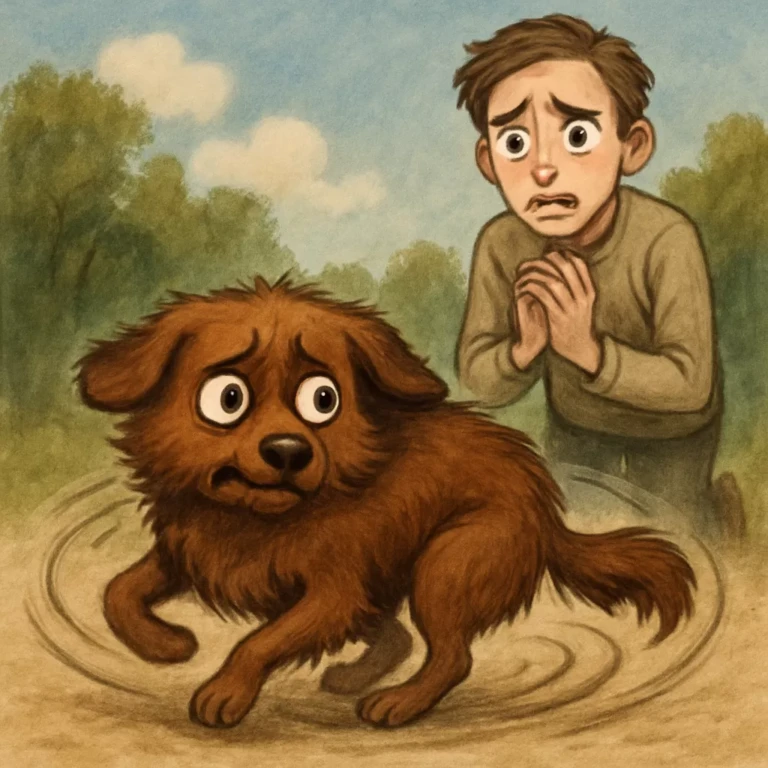
Distinguishing Anxiety Disorders from Reasonable Responses to Unreasonable Conditions
TAO Animal Center Research Dept.
Abstract
“Anxiety” has become the default diagnosis for any dog showing stress, fear, or behavioral difficulty. This paper argues that the anxiety label is vastly over-applied, obscuring critical distinctions between: (1) generalized anxiety disorder requiring intervention, (2) appropriate worry in genuinely concerning situations, (3) high sensitivity mislabeled as anxiety, (4) trauma responses called anxiety, (5) unmet needs manifesting as anxious behaviors, and (6) learned helplessness mistaken for anxiety. We provide assessment frameworks to distinguish these presentations and outline anxiety-specific interventions. Most critically, we address the question few ask: Is this dog anxious, or is this dog accurately assessing a situation that should produce concern? The answer determines whether intervention targets the dog or the environment.
Keywords: canine anxiety, generalized anxiety disorder, stress response, assessment protocols, environmental stressors, anxiolytic medication
Introduction: The Anxiety Epidemic That Might Not Be
A common scenario:
Owner reports: “My dog is anxious.”
What they mean might be any of:
- Dog is scared of specific things (phobia, not generalized anxiety)
- Dog is cautious in new situations (sensitivity, not anxiety)
- Dog pants and paces sometimes (could be pain, heat, boredom, stress, or anxiety)
- Dog was traumatized and now fearful (trauma, not primary anxiety)
- Dog destroys things when alone (separation anxiety, specific issue)
- Dog barks at noises (could be boredom, territoriality, sensitivity, or anxiety)
- Dog won’t settle in chaotic household (appropriate response to chaos)
- Dog seems “stressed” (anxiety? or stressed by actual stressors?)
“Anxiety” has become catch-all for: dog is not calm/happy.
Problem: Different causes require different interventions. Treating everything as “anxiety” fails most dogs.
What Anxiety Actually Is (And Isn’t)
True Generalized Anxiety Disorder in Dogs
Characteristics of genuine GAD:
1. Excessive worry across contexts
- Not situation-specific
- Present in safe environments
- Pervasive, not occasional
- Not triggered by identifiable stressors
2. Difficulty relaxing anywhere
- Can’t settle in familiar, calm home
- Always vigilant
- Minimal restful sleep
- No “safe” spaces feel safe
3. Anticipatory stress
- Worry about things that might happen
- Constant scanning for potential threats
- Tense even when nothing is happening
4. Physiological indicators
- Chronic stress markers (elevated baseline cortisol)
- GI issues (stress-related diarrhea, vomiting)
- Stress-related health problems
- Poor appetite or stress-eating
5. Functional impairment
- Can’t enjoy activities
- Reduced quality of life
- Health impacts
- Unable to learn (chronic stress impairs learning)
6. Not better explained by:
- Specific phobia (one trigger)
- Trauma (specific trigger/memory)
- Sensitivity (context-dependent)
- Medical issues (pain, illness)
- Environmental problems (actually unsafe conditions)
Example of genuine GAD:
Dog in calm, predictable home with attentive owner. No trauma history. No obvious stressors. Yet:
- Paces constantly
- Startles at minor sounds (not new, not unusual)
- Can’t settle even during quiet times
- Chronically vigilant
- GI issues (stress-related)
- Doesn’t respond to environmental changes (still anxious in less stimulating settings)
This is anxiety disorder. Needs intervention.
What Gets Mislabeled as “Anxiety”
1. Sensitivity (See HSP paper)
- Context-dependent (calm in low-stimulation, overwhelmed in high-stimulation)
- Accurate reading of environment
- Not worried about non-existent threats
- Needs environmental accommodation, not anxiety treatment
2. Trauma Response (See Trauma paper)
- Specific triggers (related to trauma)
- Memory-based fear
- May generalize but has origin point
- Needs trauma processing, not anxiety medication
3. Appropriate Response to Concerning Situation
- Dog is “anxious” in genuinely unsafe/unstable environment
- Worry is warranted
- Environment needs changing, not dog
4. Unmet Needs
- Boredom manifests as restlessness (“anxious” appearance)
- Under-exercised dog paces (“anxiety”)
- Socially isolated dog is distressed (“anxious”)
- Needs: Exercise, enrichment, connection – not anxiety treatment
5. Pain/Medical Issues
- Pain causes stress behaviors that look like anxiety
- Panting, pacing, restlessness
- Can’t settle (not anxiety—discomfort)
- Needs: Medical assessment, pain management
6. Learned Helplessness
- Chronic stress creates shutdown that looks “calm”
- Or creates hypervigilance that looks like “anxiety”
- But root cause: Lack of control, not anxiety disorder
- Needs: Agency restoration, not anxiolytics
Assessment Framework: What Kind of “Anxiety” Is This?
Step 1: Rule Out Medical Causes
Many conditions mimic anxiety:
Pain:
- Arthritis, dental pain, GI pain
- Presents as: Panting, restlessness, pacing, difficulty settling
- Dogs can’t say “I hurt” – often looks like anxiety
Thyroid issues:
- Hypothyroidism common in dogs
- Can present as anxiety, hyperactivity, or lethargy
- Simple blood test rules out
Cognitive dysfunction (senior dogs):
- Sundowing, confusion, stress
- Looks like anxiety but is cognitive decline
Neurological issues:
- Seizure disorders
- Brain tumors
- Vestibular disease
- Can all present with anxiety-like symptoms
GI issues:
- Nausea, discomfort
- Creates restlessness, panting
- May be cause, not result, of apparent anxiety
Medication side effects:
- Some medications cause agitation
- Some cause sedation that looks like “anxiety reduced” but is actually suppression
First step always: Full veterinary workup. Blood work, physical exam, pain assessment.
If medical issues found: Treat those first. “Anxiety” may resolve.
Step 2: Assess Environmental Factors
Is the dog’s environment genuinely anxiety-producing?
Checklist:
Physical environment:
- [ ] Constant loud noises (traffic, construction, neighbors)
- [ ] Chaotic household (yelling, conflict, unpredictability)
- [ ] Unsafe conditions (aggressive animals nearby, threats)
- [ ] Uncomfortable conditions (too hot, too cold, cramped space)
- [ ] No safe space (dog has nowhere to retreat)
Social environment:
- [ ] Household conflict (arguing, tension)
- [ ] Aggressive animals in home
- [ ] Punishment-based training (creating fear)
- [ ] Inconsistent caregivers (rotating, unpredictable)
- [ ] Isolation (dog alone most of time)
Routine/predictability:
- [ ] Irregular schedule (feeding, walks, sleep vary wildly)
- [ ] Frequent major changes (moving, new people, etc.)
- [ ] No predictability (dog never knows what’s happening)
- [ ] Constant surprises (visitors, construction, changes)
Basic needs:
- [ ] Insufficient exercise
- [ ] Inadequate mental stimulation
- [ ] Poor quality food (nutrition affects behavior)
- [ ] Insufficient sleep (disrupted, inadequate rest)
- [ ] Lack of social connection
If multiple boxes checked: The “anxiety” might be appropriate response to genuinely problematic conditions.
Intervention: Change environment, not dog.
Step 3: Distinguish From Other Conditions
Use this decision tree:
Is fear/stress related to specific trigger?
- YES → Could be: Phobia, trauma, learned fear
- Is trigger related to past trauma? → Trauma response (see Trauma paper)
- Is trigger novel/unfamiliar? → Phobia or inadequate exposure
- Is trigger actually threatening? → Appropriate fear
- NO → Continue assessment
Is presentation context-dependent?
- YES → Could be: Sensitivity (see HSP paper)
- Calm in low-stimulation? → Likely sensitivity
- Stressed in high-stimulation? → Environmental mismatch
- Consistent pattern? → Temperament, not anxiety
- NO → Continue assessment
Is there history of trauma or significant life changes?
- YES → Could be: Trauma, grief, adjustment disorder
- Recent loss? → Grief response
- Known trauma? → PTSD-like presentation
- Major change? → Adjustment difficulty (temporary)
- NO → Continue assessment
Are basic needs met?
- NO → Address unmet needs first
- Inadequate exercise? → Increase activity
- Boredom? → Provide appropriate engagement
- Isolation? → Increase social time
- Re-assess after 4-6 weeks
- YES → Continue assessment
Is stress pervasive (all contexts) and persistent (doesn’t improve with environmental changes)?
- YES → Could be: Generalized anxiety disorder
- Veterinary behaviorist assessment recommended
- Consider medication + behavioral support
- NO → Likely not GAD
Case Studies: Distinguishing Anxiety from Other Issues
Case 1: The “Anxious” Dog Who Wasn’t
Presentation:
- 4-year-old Labrador
- Owner reports: “Constantly anxious”
- Behaviors: Panting, pacing, restless, won’t settle, occasional GI upset
Standard diagnosis: Generalized anxiety disorder. Prescribed: Fluoxetine.
St. Pawgustine’s assessment revealed:
Medical: Mild hip dysplasia (pain, especially after activity)
Environmental:
- Owner works 10-hour days
- Dog alone most of time
- 15-minute morning walk, 15-minute evening walk
- No mental stimulation
- Weekend: Intense 3-hour hikes (overdoing after under-doing)
The “anxiety”:
- Pacing = restlessness from under-stimulation + discomfort from hip
- Panting = pain + stress from boredom
- GI upset = stress from isolation + pain flare-ups after intense weekend activity
This wasn’t anxiety disorder. This was:
- Undiagnosed pain (hip dysplasia)
- Under-exercised, under-stimulated dog
- Boom-bust activity pattern (nothing weekdays, too much weekends)
Intervention:
- Pain management (veterinary, appropriate exercise, supplements)
- Midday dog walker (break up alone time, moderate daily exercise)
- Mental stimulation
- Consistent daily activity (not boom-bust pattern)
Outcome: Within 6 weeks, all “anxiety” behaviors resolved. No medication needed.
The dog wasn’t anxious. The dog had pain and unmet needs.
Case 2: Sensitivity Mislabeled as Anxiety
Presentation:
- 3-year-old Border Collie mix
- “Severe anxiety”
- Behaviors: Fearful of loud noises, stressed in busy environments, startles easily
Previous interventions:
- Tried fluoxetine (made worse—more agitated)
- Tried trazodone (sedated but still stressed)
- Desensitization to sounds (minimal improvement)
St. Pawgustine’s assessment:
- History: No trauma, no medical issues
- Pattern: Calm in quiet home, stressed in high-stimulation environments
- Sensory: Detects sounds others don’t notice, visually sensitive
Diagnosis: Highly sensitive dog (HSP), not GAD.
Key difference:
- Anxiety: Worried in safe, quiet environments
- Sensitivity: Fine in low-stimulation, overwhelmed in high-stimulation
Intervention:
- Environmental accommodation (quiet home, predictable routine)
- Avoid high-stimulation (no dog parks, busy areas)
- Stop medication (not needed for temperament)
Outcome: Dog thriving in appropriate environment. No “anxiety” in quiet, predictable settings.
The dog wasn’t anxious. The dog was sensitive in overwhelming environments.
Case 3: Trauma Called Anxiety
Presentation:
- 5-year-old mixed breed, rescue
- “Generalized anxiety”
- Behaviors: Hypervigilant, reactive to men, won’t settle, stress-related GI issues
History (eventually discovered):
- Physical abuse from male owner
- Multiple rehomings
Diagnosis: Complex trauma (PTSD-like), not primary anxiety disorder.
Key difference:
- GAD: Anxious without clear trigger, pervasive
- Trauma: Specific triggers (men), hypervigilance (learned from unsafe environment)
Intervention:
- Trauma-informed care (see Trauma paper)
- Safety establishment (months)
- Avoid triggering situations initially
- Gradual, dog-paced processing
Outcome: After 18 months, dog significantly improved. Still cautious with men (appropriate given history), but can relax in safe home with trusted people.
This wasn’t anxiety disorder. This was trauma response.
Case 4: Appropriate Worry in Concerning Situation
Presentation:
- 6-year-old Pit Bull mix
- “Suddenly anxious”
- Behaviors: Hypervigilant, stressed, won’t settle, stress GI issues
Recent changes:
- New neighbors moved in
- Neighbors have dog who lunges at fence
- Neighbors’ dog has attempted to jump fence twice
- Owner unaware of severity
Assessment:
- Dog’s “anxiety” spiked when new neighbors arrived
- Stress behaviors worst when neighbors’ dog is outside
- Dog is calm when inside, away from fence
- Correlation clear
This isn’t anxiety disorder. This is accurate threat assessment.
The dog has reason to worry. There’s a genuine threat.
Intervention:
- Address actual threat (reinforce fence, cameras)
- Create safe outdoor space (area where dog can’t see/hear neighbor dog)
- Environmental management, not dog treatment
Outcome: Once threat managed, “anxiety” resolved.
The dog wasn’t disordered. The dog was correctly identifying danger.
Case 5: Learned Helplessness Mistaken for Anxiety
Presentation:
- 4-year-old Beagle
- “Anxious, won’t engage”
- Behaviors: Freezes frequently, won’t make eye contact, submissive urination, seems “worried”
History:
- Previous owner used punishment-based training
- Shock collar, alpha rolls, “corrections”
- Dog learned: Movement = potential punishment
Diagnosis: Learned helplessness, not anxiety disorder.
Key difference:
- Anxiety: Worried about potential threats
- Learned helplessness: Stopped trying because learned nothing they do matters
Presentation looks “anxious” but actually:
- Freeze = avoid punishment
- No eye contact = submission to prevent aggression
- Urination = appeasement behavior
- “Worried” = anticipating punishment
Intervention:
- Stop all training
- Rebuild trust (months of just… being)
- Agency restoration (see Freedom protocols)
- Gentle, choice-based engagement when ready
- No commands, no demands
Outcome: After 6+ months, dog began showing personality, making choices, engaging. “Anxiety” was suppression from learned helplessness.
This wasn’t anxiety. This was survival strategy from abuse.
When Anxiety IS the Primary Issue
Genuine Generalized Anxiety Disorder
After ruling out:
- Medical causes
- Environmental problems
- Sensitivity
- Trauma
- Unmet needs
- Learned helplessness
If dog still presents with:
- Pervasive worry (all contexts)
- Can’t relax even in safe, appropriate environments
- Excessive vigilance without clear trigger
- Physiological stress markers
- Functional impairment
- Doesn’t improve with environmental optimization
Then: Likely true anxiety disorder. Needs intervention.
Treatment Approaches for Genuine GAD
1. Veterinary Behaviorist Assessment
Essential for genuine anxiety disorder:
- Confirm diagnosis
- Rule out remaining medical issues
- Create comprehensive treatment plan
Don’t:
- Self-diagnose based on internet
- Start medication
Do:
Find a Vet who supports integrative care.
Talk to someone who provides sincere trauma-informed care to respect the needs of a dog with anxiety and works with a vet who supports integrative care.
2. Environmental Optimization
Even with genuine anxiety disorder:
Reduce stressors:
- Predictable routine
- Calm household
- Safe spaces
- Minimize changes
Support regulation:
- Adequate sleep
- Appropriate exercise (not over-exercise)
- Mental stimulation (not overwhelming)
- Social connection (if dog desires)
Create safety:
- Physically safe space
- Emotionally safe relationships
- No punishment-based methods
- Trust-building
4. Behavioral Support
What helps anxious dogs:
Confidence-building:
- Success experiences (achievable tasks)
- Choice-based engagement
- Gradual challenge increase
- Lots of reinforcement
Calming protocols:
- Relaxation
- Massage, TTouch (if dog accepts)
- Calming supplements (CBD, adaptogenic herbs – with vet approval)
Predictability:
- Clear routines
- Cues for what’s happening
- Advance warning of changes
- Consistency
What doesn’t help:
- Flooding (forced exposure to fears)
- Punishment (increases anxiety)
- “Just face your fears” approaches
- Ignoring distress signals
5. Complementary Approaches
May help some dogs:
Supplements:
- L-theanine
- Chamomile
- Valerian root
- CBD (veterinary-approved products)
- Always with vet approval
Physical:
- Calming music
- Aroma Therapy
- Regular massage
Activities:
- Nosework (engaging but not stressful for most)
- Engaging adventure walks
- Low-pressure activities
Lifestyle:
- Consistent caregiver
- Predictable household
- Appropriate activity level
- Social connection (if desired)
The Critical Question: Dog or Environment?
When “Treatment” Targets the Wrong Thing
Scenario A: Environmental Problem
Dog is “anxious” in genuinely problematic conditions:
- Chaotic household
- Insufficient exercise
- Isolation
- Unsafe environment
Wrong approach: Medicate dog.
Right approach: Change environment.
If you medicate environmental problems: Dog tolerates inadequacy but inadequacy remains. Long-term stress, suppressed rather than resolved. Side effects.
Scenario B: Sensitivity
Dog is sensitive temperament in high-stimulation environment.
Wrong approach: Desensitize, medicate, push through.
Right approach: Accommodate sensitivity, provide appropriate environment.
If you treat sensitivity as anxiety: You’re trying to change temperament. It won’t work, and it harms.
Scenario C: Trauma
Dog has trauma history, now hypervigilant.
Wrong approach: Expose to triggers, medicate anxiety.
Right approach: Trauma-informed care, processing, safety.
If you treat trauma as anxiety: You miss the root cause. Symptom management without healing.
Scenario D: Genuine Anxiety Disorder
Dog has GAD – anxious even in safe, appropriate conditions.
Right approach: Integrative Veterinary Care, Trauma-Informed Care, environmental optimization.
How to Know Which One
Ask:
- Is the environment actually appropriate for this dog?
- If NO → Change environment first
- Is this pattern context-dependent?
- If YES (calm in some environments, stressed in others) → Likely sensitivity, not GAD
- Is there trauma history or specific triggers?
- If YES → Address trauma specifically
- Are basic needs met?
- If NO → Meet needs first
- Is dog anxious in genuinely safe, calm, appropriate environment with needs met?
- If YES → Possibly genuine anxiety disorder
Only after ruling out A, B, C → Consider D.
Rocky’s Perspective: On Anxiety and Acceptance
Rocky (Italian Hound, monk, mindfulness specialist) offers:
“Bark and I disagree on many things. He thinks I meditate too much. I think he worries too much. But on anxiety, we agree:
The question isn’t ‘How do we eliminate all anxiety?’ Anxiety can be appropriate. Warning system. Protective.
The question is: ‘Is this anxiety proportional to actual threat?’
Dog in unsafe environment, anxious? Appropriate. Change environment.
Dog in chaotic household, stressed? Reasonable. Create calm.
Dog with trauma, hypervigilant? Understandable. Provide safety.
Dog in calm, safe, appropriate environment, chronically worried? Then we address anxiety itself.
But first, we must be honest: Is the environment actually safe, calm, and appropriate? Or are we calling appropriate responses to inappropriate conditions ‘anxiety’?
Mindfulness isn’t about eliminating all discomfort. It’s about being present with what is, and responding wisely.
For dogs, wise response sometimes means: The environment needs changing, not the dog.”
Bark’s Counterpoint: On Anxiety and Agency
Bark (black greyhound, podcast host, professional skeptic) responds:
“Rocky meditates. I pace. We both process stress differently.
Here’s what I know about anxiety:
Helplessness creates it. Agency reduces it.
When I had no control – I developed ‘anxiety.’ Hypervigilant, couldn’t settle, constant stress.
They medicated me. Didn’t help. Why?
Because the anxiety wasn’t the problem. The powerlessness was the problem.
When I got:
- Choice over my time
- Control over my space
- Ability to opt out
- Predictability I could count on
- People who listened when I said ‘no’
The ‘anxiety’ disappeared.
Turns out I wasn’t anxious. I was trapped.
So before you medicate anxiety, ask: Does this dog have agency? Control? Choice? Voice?
If no – that’s not anxiety disorder. That’s appropriate response to powerlessness.
Give them power. Watch the ‘anxiety’ transform.”
Practical Implementation: Assessment Protocol
For Dog Guardians
Your dog seems “anxious.” Here’s how to assess:
Week 1-2: Medical Ruling Out
- [ ] Full vet exam (physical, blood work)
- [ ] Pain assessment (especially if older)
- [ ] Medication review (anything new?)
- [ ] Diet review (adequate nutrition?)
Week 3-4: Environmental Assessment
- [ ] Track stressors (when does anxiety appear?)
- [ ] Assess basic needs (exercise, mental stimulation, social connection)
- [ ] Evaluate household stability (chaos? conflict? unpredictability?)
- [ ] Check safety (actual threats? unsafe conditions?)
Week 5-8: Environmental Changes
- [ ] Increase exercise (appropriate level)
- [ ] Add mental stimulation
- [ ] Create predictability
- [ ] Establish safe spaces
- [ ] Reduce stressors (whatever possible)
Week 9-12: Reassess
- Has “anxiety” improved with environmental changes?
- YES → Wasn’t primary anxiety disorder
- NO → Continue assessment
Month 4+: Consider Specialist
- If environmental optimization doesn’t help
- If dog remains anxious in appropriate environment
- If quality of life impaired
Throughout: Keep Journal
- When does anxiety appear?
- What contexts?
- What helps?
- What makes worse?
- Patterns reveal causes
For Professionals
Client presents dog as “anxious”:
Don’t assume diagnosis. Assess systematically:
1. Medical (always first)
- Recent vet check?
- Pain present?
- Medical conditions?
- Medication side effects?
2. Environmental
- Appropriate for dog?
- Stressors present?
- Basic needs met?
- Safety assured?
3. Behavioral history
- When did “anxiety” start?
- Trauma history?
- Training methods used?
- Life changes recently?
4. Pattern analysis
- Context-dependent? (Sensitivity)
- Trigger-specific? (Trauma, phobia)
- Pervasive? (Possible GAD)
- Recent onset? (Environmental change, medical)
5. Trial interventions
- Environmental optimization (4-6 weeks)
- Unmet needs addressed
- Re-assess
- If no improvement → Consider next steps
Don’t:
- Diagnose “anxiety” without assessment
- Recommend medication
- Ignore environmental factors
- Treat all stress as anxiety disorder
When to Seek Professional Help
Immediate (emergency):
- Dog injuring self
- Severe panic (can’t be calmed)
- Complete shutdown (not eating, drinking, moving)
- Aggression from panic
Soon (within days-weeks):
- Chronic stress affecting health
- Quality of life severely impaired
- Environmental optimization not helping
Eventually (when ready):
- Mild anxiety, manageable but persistent
- Want professional guidance
- Considering medication
Professionals to seek:
- Integrative working Vet
- Trauma-Informed Care
Avoid:
- Punishment-based trainers (worsen anxiety)
- Those using shock/prong collars (create anxiety)
- Anyone promising “quick fix”
- Those who don’t assess thoroughly
Conclusion: Anxiety Isn’t Always What It Seems
The dog presenting as “anxious” might have:
- Medical issues (pain, thyroid, cognitive decline)
- Sensitivity (temperament in wrong environment)
- Trauma (specific history requiring specific care)
- Unmet needs (boredom, isolation, under-exercise)
- Appropriate worry (genuinely concerning situation)
- Learned helplessness (suppression from punishment)
- Or: Genuine generalized anxiety disorder
Only the last one is actually “anxiety disorder.”
The intervention depends entirely on accurate assessment:
If environmental: Change environment
If sensitivity: Accommodate temperament
If trauma: Trauma-informed care
If unmet needs: Meet needs
If appropriate worry: Address actual problem
If learned helplessness: Restore agency
If genuine GAD: Integrative Vet, Trauma-Informed Care
Most “anxious” dogs don’t have anxiety disorder.
Most have appropriate responses to inappropriate conditions.
Before you medicate the dog, check the environment.
Before you treat anxiety, confirm it’s actually anxiety.
Because the dog might not be anxious.
The dog might just be accurately assessing a situation that warrants concern.
And the treatment for that isn’t Prozac.
It’s change.
Key Takeaways
- “Anxiety” is over-diagnosed (catch-all for stressed dog)
- Rule out medical causes first (pain, thyroid, cognitive issues)
- Assess environment (is worry appropriate to conditions?)
- Distinguish from sensitivity, trauma, unmet needs
- Environmental optimization before medication
- Genuine GAD exists but is less common than diagnosis suggests
- Medication isn’t a solution
- Agency reduces anxiety, helplessness creates it
- Context matters (anxious everywhere? or just overwhelming places?)
- Treatment targets cause, not just symptom
Resources
Canine anxiety research:
- Overall, K. (2013). Manual of Clinical Behavioral Medicine for Dogs and Cats. Elsevier.
- Landsberg, G., Hunthausen, W., & Ackerman, L. (2013). Behavior Problems of the Dog and Cat. Saunders.
Author Contributions:
Dr. G. Racco: Clinical assessment, anxiety differentiation, treatment protocols.
Dr. M. Cata: Neurobiological framework, medication considerations, stress response analysis.
Rocky: Mindfulness perspective, appropriate worry vs. disorder distinction.
Acknowledgments:
To Bark Twain for reminding us that agency matters more than anxiolytics. To every dog labeled “anxious” who was actually responding appropriately to genuinely problematic conditions.
Conflict of Interest Statement:
The authors declare no conflicts of interest. We do declare opposition to reflexive medication of stress responses without thorough environmental and medical assessment.
St. Pawgustine’s Institute for Advanced Canine Psychology
“Where we ask: ‘Is the dog anxious, or is the environment anxiety-producing?’ The answer changes everything.”
