
The Evolution of Pet Care
Evolution

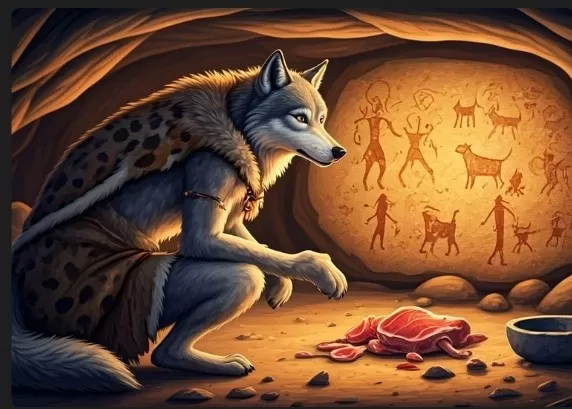
c. 30,000 BCE - 400 CE
Ancient Times
c. 30,000 BCE - 400 CE
- Dogs were depicted in cave paintings dating back 15,000+ years, showing early hunting partnerships
- Ancient Egypt and Persia included the dog, murdering a dog was a capital crime, mistreating dogs was a sure way to hell and the death of a family dog elicited the same grief as for a human. It was believed that one would meet one’s canine friend again in the afterlife
- The earliest evidence of veterinary medicine comes from China, Mesopotamia, India, and Egypt c. 3000 BCE
- Imhotep, an Egyptian polymath, suggests that illness is caused by environmental factors, diet, and lifestyle
- The earliest veterinarian text from Egypt is the Kahun Papyrus dated to the reign of Amenemhat III (c. 1860-c.1814 BCE) of the Middle Kingdom
- Earliest examples of veterinary medicine in China involve the care of cattle and horses, with “horse priests” using acupuncture to successfully treat lame or colic horses c. 3000 BCE
- The Greek physician Hippocrates documented early veterinary treatments for animals around 400 BCE
c. 30,000 BCE - 400 CE
c. 400 - 1600 CE
Medieval/Renaissance Period
c. 400 - 1600 CE
- 476 CE: The Western Roman Empire falls, leading to a loss of prior knowledge of veterinary science in Europe. The Church forbids dissection and destroys related literature
- The Church’s view that animals lack immortal souls leads to a lack of interest in veterinary medicine in Europe, except for the Arabs in Spain who maintain an interest in horse diseases
- Noble ladies often kept small lap dogs that received special diets including finely minced meats and bread soaked in milk
- Hildegard of Bingen (12th century) documented herbal remedies specifically for animal ailments
- Late 12th and Early 13th Centuries: Europeans begin to pay renewed attention to animal health, primarily for horses and cattle due to their economic importance
- Specialized woven beds for royal pets appeared around the 14th century
- The first known pet care manual was written in 1424 by Master James of England, focusing on greyhound care
c. 400 - 1600 CE

c. 1760 - 1914
Industrial Revolution
c. 1760 - 1914
- c. 1715-1789 (Age of Enlightenment): Veterinary medicine sees a renewed interest in Europe, with knowledge of earlier contributions largely unknown. Hippocrates, Galen, and Vegetius’ work informs early veterinary schools
- 1762: Claude Bourgelat founds the first veterinary educational institute in Europe in France, responding to cattle plague
- 1765: King Louis XV of France establishes the Royal School of veterinarian medicine and other schools would follow in other European countries through 1791 and up through 1862 with the first veterinary school in the United States – the Veterinary College of Philadelphia – established in 1852.
- The first commercial pet food was created in 1860 by James Spratt, an electrician who developed dog biscuits after seeing sailors feed hardtack to dogs
- Early dog shows began in England in the 1850s, leading to standardized breeding practices
- First pet insurance policies were offered in Sweden in 1890
- Rudimentary flea powders containing pyrethrum (from chrysanthemum flowers) became commercially available
c. 1760 - 1914
c. 1914 - 1970s
Mid-20th Century
c. 1914 - 1970s
- The first commercial dry pet food manufacturing process was developed in the 1950s
- Early synthetic flea collars emerged in the 1960s, using now-banned pesticides
- Vaccination protocols for pets became standardized and widespread by the 1960s
- Training methods focused heavily on dominance theory and correction-based approaches
c. 1914 - 1970s

c. 1970s - 2000
Late 20th Century
c. 1970s - 2000
- The first specialized veterinary diets for specific health conditions were introduced in the 1980s
- Positive reinforcement training began gaining traction with Karen Pryor’s work in the 1980s
- The human-animal bond became a subject of scientific study, with research showing measurable health benefits
- Microchipping technology for pets was introduced in the early 1990s
c. 1970s - 2000

c. 2000 - 2020
Early 21st Century
c. 2000 - 2020
- Pet supplements became a billion-dollar industry by 2005
- GPS tracking collars and pet cameras created the “connected pet”
- Raw feeding movements and ancestral diets gained popularity
- Advanced diagnostics like MRIs and specialized surgical procedures became available to pets
c. 2000 - 2020
c. 2020 - Present
Present Day
c. 2020 - Present
- Integration of behavioral science and enrichment into daily pet care
- Recognition of emotional and cognitive needs beyond basic physical care
- Return to natural remedies complemented by evidence-based research
- Focus on personalized care plans rather than one-size-fits-all approaches
c. 2020 - Present
